📌 Key Takeaways
- What it covers: Business management software brings accounting, inventory, sales, HR and payroll, and customer management into connected systems so that data is entered once and reported accurately.
- Start with compliance: In Malaysia, shortlisted platforms should handle LHDN e-invoicing through MyInvois, SST, and payroll statutory deductions such as EPF, SOCSO, EIS and PCB.
- Size the system to the business: Many SMEs start with accounting software such as AutoCount and move to a cloud ERP such as Oracle NetSuite when entities, locations or transaction volumes outgrow it.
- Suite or best of breed: An integrated suite reduces reconciliation work, while specialist tools for CRM or HR can be better if they connect cleanly to your core system.
- Implementation decides the outcome: Process mapping, clean data and training matter as much as the software you choose.
Table of Contents
- What Is Business Management Software in Malaysia?
- The Main Types of Business Management Software
- Malaysian Requirements Every Platform Must Meet
- Matching the Platform to Your Stage of Growth
- Integrated Suite or Best-of-Breed Tools?
- What Business Management Software Costs in Malaysia
- Business Management Software Malaysia Checklist: Questions for Vendors
- How to Choose: A Step-by-Step Process
- Next Steps: Get a Recommendation That Fits Your Business
- Frequently Asked Questions
What Is Business Management Software in Malaysia?
Business management software in Malaysia is the set of systems a company uses to run its finance, inventory, sales, customers, people and compliance, ranging from accounting software for small firms to full cloud ERP for multi-entity groups. The right choice for a Malaysian SME is the platform that handles local requirements such as LHDN e-invoicing, SST and payroll statutory deductions today, and can grow with the business for the next five to ten years without a costly replacement.
Most SMEs do not need everything at once. They need a solid core, usually accounting and inventory, and a clear path to add CRM, HR and payroll, point of sale or a full ERP as the business grows. This guide explains the main categories, the Malaysian requirements to check, and a practical way to choose without overbuying.
The Main Types of Business Management Software
The term covers several categories. Knowing which one solves your current problem keeps the shortlist short.
| Category | What it manages | Examples offered by iDynamics |
|---|---|---|
| Accounting software | General ledger, receivables, payables, billing, inventory, tax and financial reports | AutoCount Accounting, AutoCount Cloud Accounting |
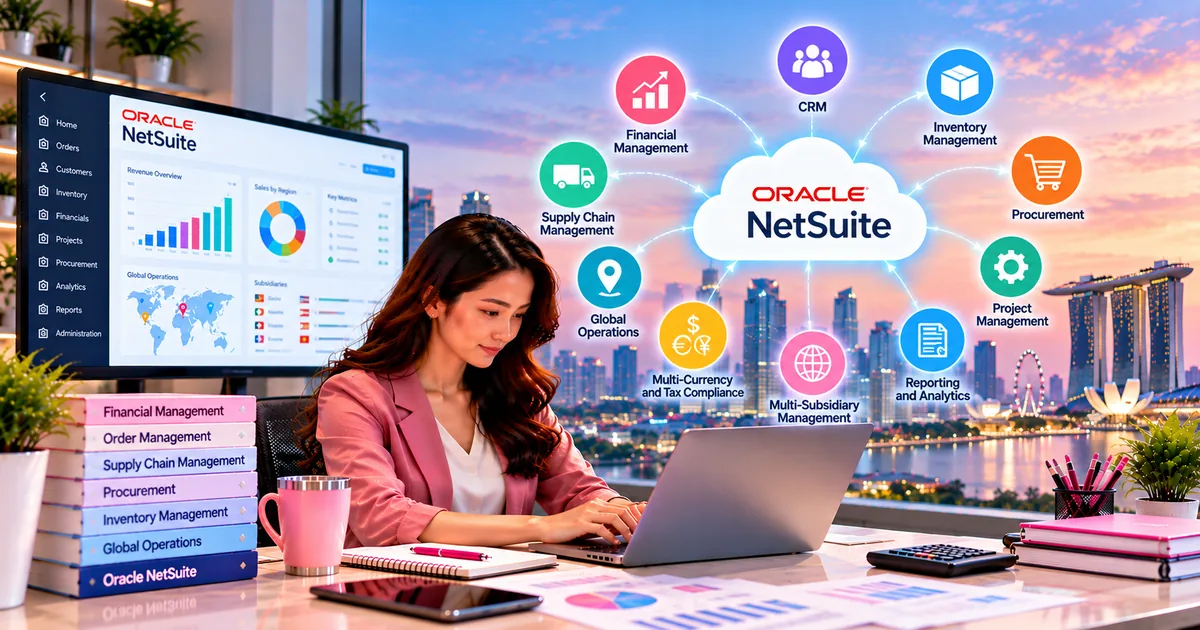
| Cloud ERP | Finance, supply chain, warehouse, projects and multi-entity reporting on one platform | Oracle NetSuite |
| CRM | Leads, deals, sales pipeline and sales activities | Pipedrive |
| HRMS and payroll | Employee records, leave, attendance, claims, payroll and statutory deductions | brioHR, AutoCount Cloud HRMS |
| Point of sale | Retail and F&B sales, outlets and consolidated daily sales | AutoCount POS |
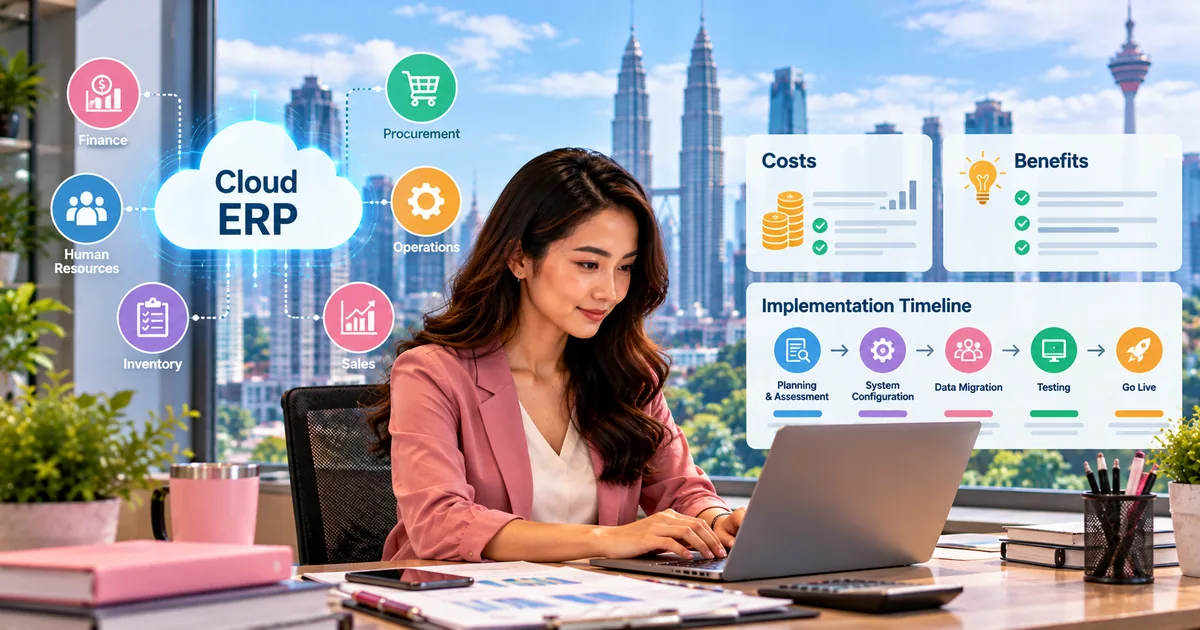
An ERP combines several of these functions in one database. Accounting software can be extended with modules and plug-ins, and specialist CRM or HR systems can be connected to it. The question is not which category is best, but which combination fits your size and complexity.
Malaysian Requirements Every Platform Must Meet
Local compliance is where generic, overseas-first software often falls short. Before comparing features, confirm that each shortlisted platform handles the following:
- LHDN e-invoicing: submission to MyInvois, storage of the validated unique identifier number and QR code, and support for consolidated, self-billed, credit and debit note e-invoices where your business needs them.
- SST: correct tax codes on sales and purchase documents and reports that support your sales and service tax returns, if you are registered.
- Payroll statutory deductions: EPF (KWSP), SOCSO (PERKESO), EIS and monthly tax deductions (PCB or MTD), plus year-end employee forms.
- Multi-currency: for importers, exporters and businesses with regional customers or suppliers.
- Local support: a partner in Malaysia who understands these rules and can update your set-up when they change.
e-Invoicing deserves particular attention because the rules have changed several times. Under LHDN’s General Guideline version 4.8, issued on 30 August 2026, taxpayers with annual turnover or revenue of less than RM3 million are exempt from issuing e-invoices, unless group rules apply. Even exempt SMEs benefit from a system that can switch e-invoicing on later.
Matching the Platform to Your Stage of Growth
SME Corporation Malaysia’s SME definition covers manufacturers with sales turnover not exceeding RM50 million or up to 200 full-time employees, and services and other sectors with turnover not exceeding RM20 million or up to 75 full-time employees. That is a wide range, and the right software differs a great deal across it.
| Business profile | Typical needs | Usual starting point |
|---|---|---|
| Single company, one location, simple stock | Accounting, billing, basic inventory, SST and e-invoicing | Accounting software, on-premise or cloud |
| Growing trader or distributor with branches | Multi-location stock, multi-currency, approvals, POS or e-commerce links | Accounting software with modules and plug-ins, plus CRM and HR |
| Multi-entity group or regional business | Consolidation, intercompany, warehouse management, projects, real-time dashboards | Cloud ERP such as Oracle NetSuite |
A useful rule: if your finance team spends days each month reconciling data between systems, consolidating spreadsheets across companies or chasing stock figures, you have outgrown your current set-up. If your main pain is invoicing speed or basic reporting, a well-configured accounting system such as AutoCount Accounting is often enough.
Integrated Suite or Best-of-Breed Tools?
Once the core system is chosen, the next decision is whether everything comes from one platform or whether you connect specialist tools.
Integrated suite
- One database for finance, operations and reporting, so fewer reconciliations.
- One vendor relationship and one support channel.
- Best suited to businesses with complex operations or several entities.
Best-of-breed tools
- Specialist CRM, HR or POS tools that may be easier for those teams to use.
- Lets you replace or add one area without changing the whole stack.
- Works well only when integrations are reliable and data ownership is clear.
Many Malaysian SMEs combine the two: a core accounting or ERP system, a CRM such as Pipedrive for the sales team, and an HR and payroll platform such as brioHR, which handles EPF, SOCSO, EIS and PCB calculations. The key is to decide which system owns each piece of data, such as customers, items and employees, and to avoid keying the same record twice.
There is also a newer option: building custom tools with AI. It can work for narrow needs, but our article AI can build your ERP, but should it? explains why compliance-heavy core systems are usually better bought than built.
What Business Management Software Costs in Malaysia
Published prices vary by vendor, edition and licensing model, and many platforms, including Oracle NetSuite, are priced by quote. Instead of comparing headline prices, compare total cost over three to five years using these factors:
- Licensing model: one-time licence with annual maintenance, or annual or monthly subscription.
- Users and modules: the number of named or concurrent users and the modules each team needs.
- Implementation: process mapping, configuration, data migration, testing and training.
- Integrations: connections to POS, e-commerce, banks, CRM, HR or MyInvois.
- Infrastructure: servers and backups for on-premise systems, or none for cloud.
- Support and change: ongoing help, upgrades and adjustments when regulations change.
Because pricing depends on users and modules, ask each vendor for a written quote based on the same scope so the numbers are comparable.
Business Management Software Malaysia Checklist: Questions for Vendors
Use these questions in every demo. A vendor or partner that answers them clearly, with your own data and scenarios, is usually a safer choice than one with the longest feature list.
Compliance and local fit
- How does the system submit e-invoices to MyInvois, and what happens when LHDN’s system is unavailable?
- Can it produce consolidated and self-billed e-invoices if we need them?
- How are SST codes maintained, and who updates them when rules change?
- Are EPF, SOCSO, EIS and PCB calculated within the payroll module, or through a separate system?
Data and integration
- Which records does this system own, and how does it share them with our CRM, HR, POS or e-commerce platforms?
- How much historical data can be migrated, and who cleans it before migration?
- Can we export our data in a usable format if we move later?
Implementation and support
- Who will configure the system, and how many similar Malaysian projects have they delivered?
- What does the project plan look like, from process mapping to go-live?
- How is training delivered, and what support is available after go-live?
- What will it cost to add users, modules or another company in two years’ time?
Write the answers down for each shortlisted option. Comparing them side by side usually makes the decision clearer than any feature matrix.
How to Choose: A Step-by-Step Process
- List the problems, not the features. Write down the five issues that cost you the most time or money today, such as slow month-end close, stock errors or manual payroll.
- Map your core processes. Order to cash, procure to pay, inventory, payroll and reporting. Note where data is rekeyed.
- Set compliance must-haves. e-Invoicing, SST, payroll statutory deductions and any industry-specific needs.
- Estimate growth. Expected entities, locations, users and transaction volumes over the next three to five years.
- Shortlist two or three platforms. Ask for demos using your own scenarios, not a generic script.
- Check the partner as well as the product. Local experience, implementation method, support model and references. Our guide on how to choose an ERP implementer in Malaysia lists the questions to ask.
- Plan the rollout. Agree scope, data migration, training and a realistic go-live date, ideally at the start of a financial period.
Common mistakes to avoid
- Buying for today only. A system that fits one company and one warehouse may not handle a second entity or a new branch next year.
- Choosing on price alone. A cheaper licence can cost more if it needs manual workarounds or extra spreadsheets every month.
- Skipping data clean-up. Migrating duplicate customers, inactive items and wrong opening balances carries old problems into the new system.
- Underestimating training. Staff who are not confident in the new system quietly return to spreadsheets, and the benefits disappear.
- Leaving compliance to the end. e-Invoicing, SST and payroll settings should be tested before go-live, not after the first submission fails.
Next Steps: Get a Recommendation That Fits Your Business
The best business management software for a Malaysian SME is the one your team will use correctly every day, that keeps you compliant with LHDN and payroll rules, and that will not need replacing as soon as you grow. Start with your problems and processes, then match them to a platform and a partner.
iDynamics implements and supports AutoCount, Oracle NetSuite, brioHR and Pipedrive for Malaysian businesses, so we can recommend what fits rather than what we happen to sell. Browse our full range of business management software products, or book a free consultation with iDynamics to talk through your requirements and see a demo.
Frequently Asked Questions
What is the best business management software for SMEs in Malaysia?
There is no single best option, because the right choice depends on your size, industry and growth plans. Many Malaysian SMEs start with accounting software such as AutoCount and move to a cloud ERP such as Oracle NetSuite when they add entities, locations or complex operations.
What is the difference between accounting software and ERP?
Accounting software focuses on the general ledger, billing, receivables, payables and often inventory. ERP covers finance plus wider operations such as supply chain, warehouse, projects and multi-entity reporting on one platform.
Does business management software need to support e-invoicing in Malaysia?
If your business is within LHDN’s e-invoicing scope, your system should submit e-invoices to MyInvois or work with a provider that does. Under General Guideline version 4.8, taxpayers with turnover of less than RM3 million are exempt unless group rules apply, but choosing an e-invoice-ready system avoids replacing it later.
Is cloud or on-premise software better for Malaysian SMEs?
Cloud software removes the need for servers and allows remote access, which suits hybrid teams and multiple branches. On-premise software can suit businesses that prefer local control of data and already have IT infrastructure in place.
How much does business management software cost in Malaysia?
Costs depend on the licensing model, number of users, modules, implementation scope and integrations. Many vendors price by quote, so compare written proposals based on the same scope and total cost over three to five years.

Stephanie Chong
Stephanie writes about Malaysia’s e-invoicing, SST, tax codes, and accounting system readiness for SMEs. At iDynamics Asia, their content helps business owners and finance teams understand LHDN requirements, prepare their accounting software, and avoid common setup mistakes when managing tax-related business processes.
Expertise Areas:
Malaysia e-invoicing, LHDN e-invoice readiness, MyInvois, SST, tax codes, self-billed e-invoices, invoice consolidation, accounting system setup, SME finance operations.